Abstract
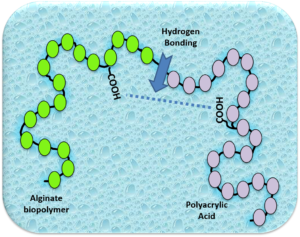 A key component in creating high-performance, sustainable materials is the combination of biopolymers with synthetic networks. Alginate-acrylic hybrid hydrogels with self-healing properties are thoroughly examined in this review. These semi-synthetic systems, in contrast to traditional hydrogels, greatly increase their functional lifespan in demanding applications by using dynamic non-covalent interactions to repair structural integrity after mechanical damage. We draw attention to their dual-use in (i) environmental remediation, where they serve as regenerable adsorbents for the removal of organic and heavy metal pollutants, and (ii) sustainable agriculture, where they serve as controlled-release fertilizer carriers and stimuli-responsive soil conditioners. Through repeated cycles of dehydration and rehydration, these materials improve soil aeration, increase water retention, and reduce nutrient leaching, all of which are critically inspected in this review. Finally, we suggest a roadmap for future research, focusing on the standardization of healing protocols and the development of energy-efficient, green synthesis routes to facilitate large-scale industrial adoption.