Abstract
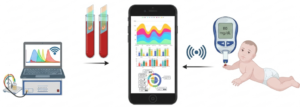 Biosensors have been widely used to diagnose diverse diseases, and to monitor treatment response and the course of disease in patients. Spinal muscular atrophy (SMA) is an autosomal recessive neurodegenerative disease, and the most frequent genetic cause of infant death. SMA occurs due to hotspot pathogenic mutations in the telomeric copy of the survival motor neuron 1 (SMN1) gene (homozygous deletion of SMN1 exon 7), leading to progressive death of alpha motor neurons, ultimately resulting in severe muscle weakness. Therefore, the accurate measurement of SMN1 protein levels or the determination of pathogenic SMN1 mutations in blood are needed for screening newborns for SMA, and for monitoring the progression of the disease and treatment response in patients diagnosed with SMA. This brief review aimed to demonstrate the success and future potential of biosensors in the determination of the levels of SMN1 protein levels or pathogenic SMN mutations in various clinical samples such as blood for the early diagnosis and monitoring of SMA.