Abstract
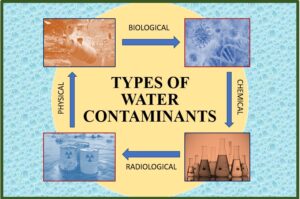 Carbon dots (CDs) used in water treatment have attracted widespread interest due to their remarkable properties and versatility in environmental purification. Carbon dots are a family of carbon-based nanomaterials that are known for their excellent fluorescence, superior electrical conductivity, tunable surface chemistry, and biodegradability. These features make them suitable for use in various water treatment processes like the detection and removal of impurities like heavy metals, organic impurities, and microorganisms. Their small size and extremely large surface area make them useful for efficient adsorption as well as for interaction with target contaminants, while optical characteristics make it easy to monitor water quality in real-time. New technologies of CD synthesis, especially green and sustainable synthesis have increased environmental suitability as well as cost-effectiveness. Despite promising development, there remains a challenge in scaling these technologies for large-scale water treatment applications, including CD stability, regeneration, and long-term performance. Current research is endeavouring to move beyond these limitations through novel design of materials and hybrid systems. The synthesis of carbon dots as a water cleaning agent is one such development within sustainable environmental engineering, offering an environmentally friendly as well as highly efficient measure for water purification. This article presents carbon dot synthesis and carbon dot treatment of water during the past five years.